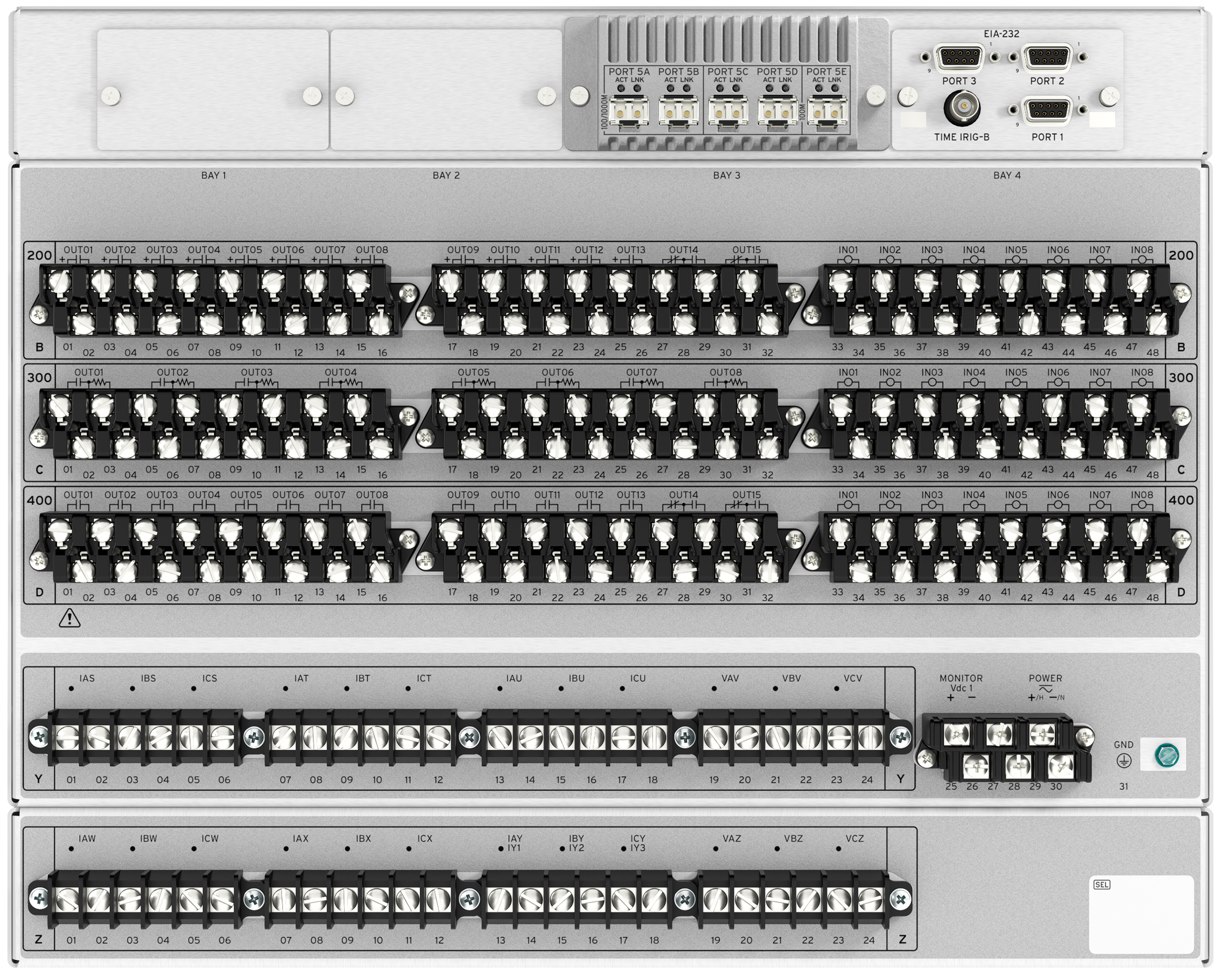
Multiwinding Protection
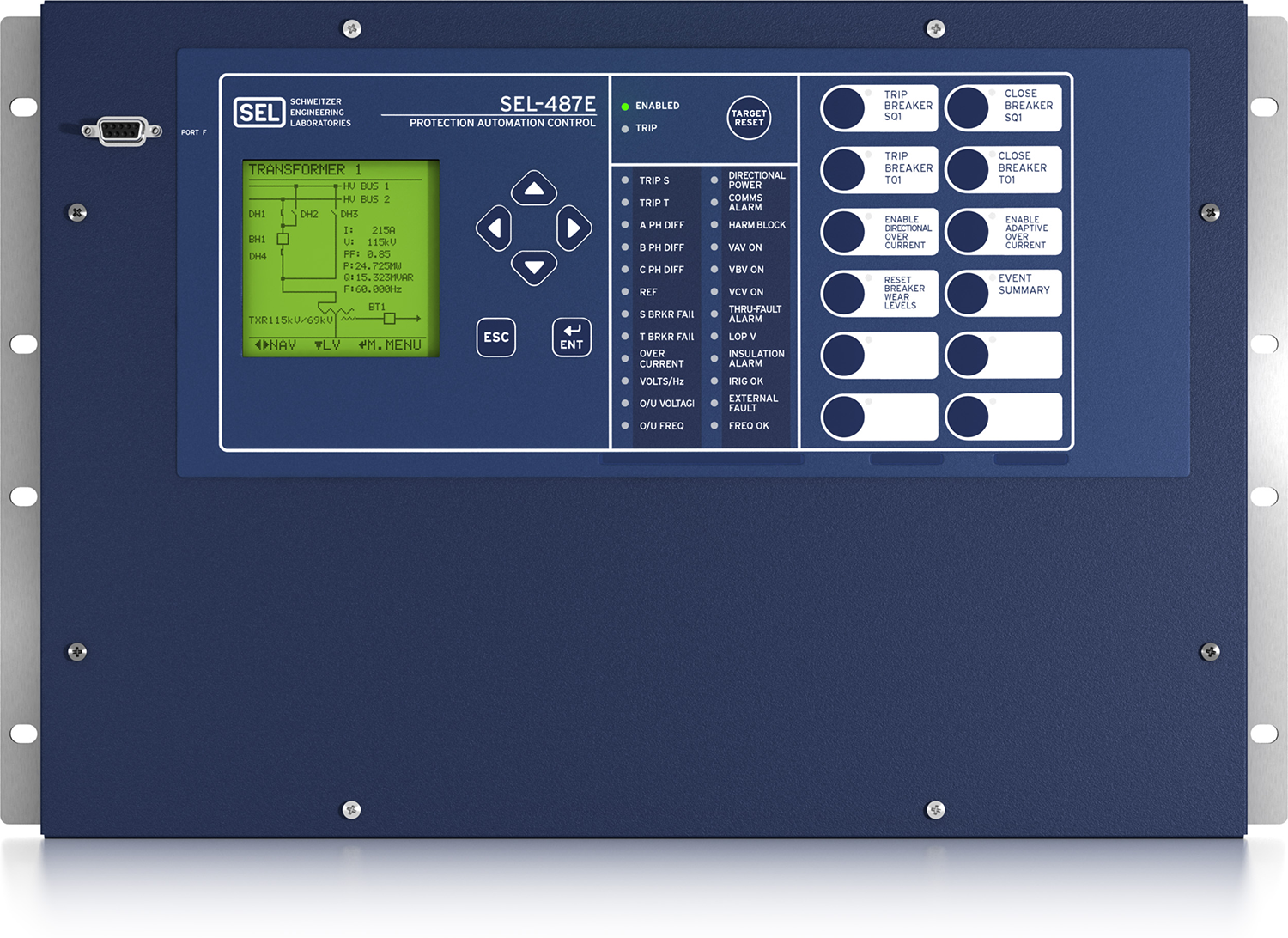
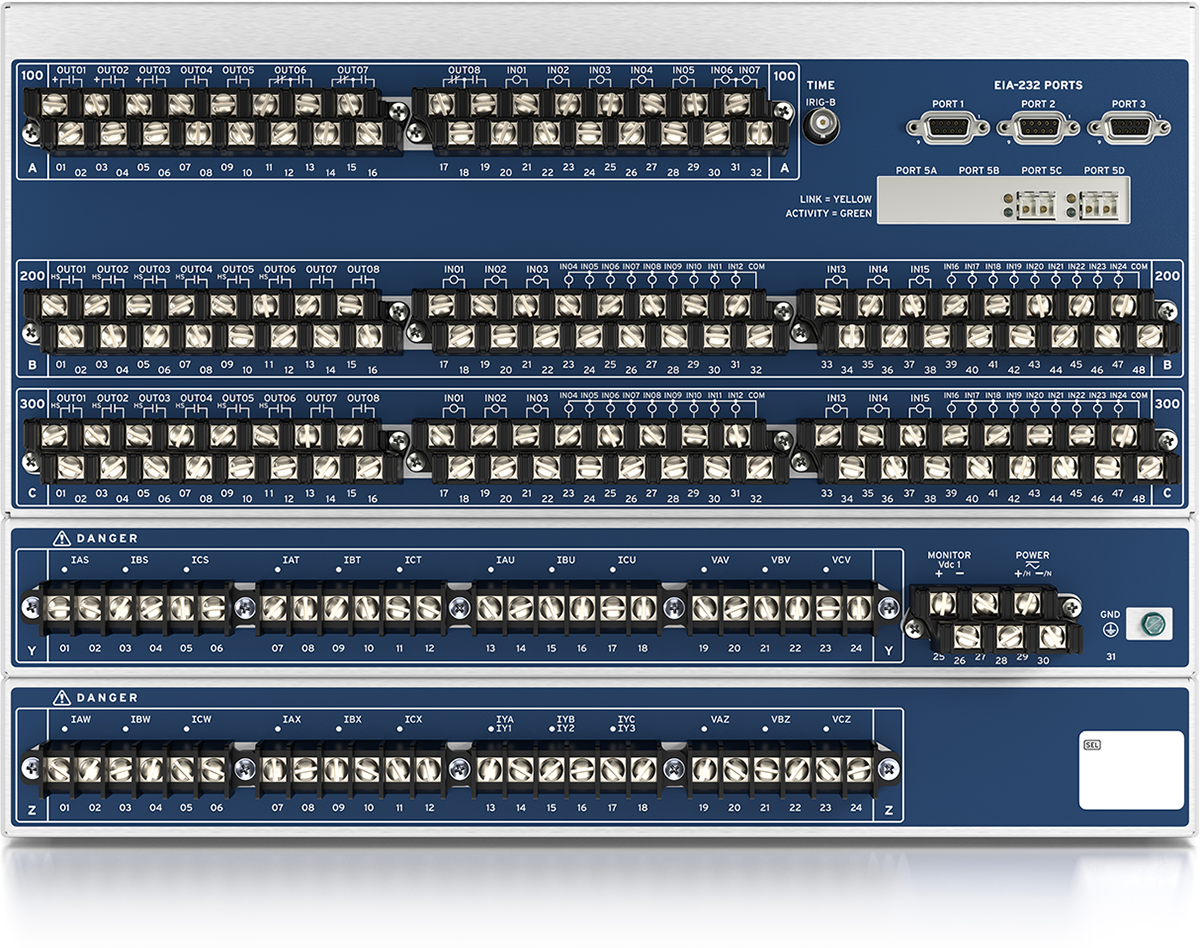
Configure the SEL-487E for transformer differential protection in transformer applications using up to seven restraint currents. This includes single transformers with tertiary windings. Three independent REF elements provide protection of grounded-wye windings. You can invert individual or grouped CT or PT polarities to account for field wiring or protection zone changes.
Sensitive Turn-to-Turn Fault Detection
Avoid catastrophic transformer failure by detecting turn-to-turn faults involving as little as 2 percent of the total winding with the patented negative-sequence differential element.
High-Speed, Adaptive Differential Protection
Implement a two-stage slope that automatically adapts to internal or external fault conditions, even with CT saturation and heavily distorted waveforms, for fast, sensitive, dependable, and secure differential protection. The adaptive differential element responds to internal fault conditions in less than 1.5 cycles.
Diverse Applications
Protect large transformers with breaker-and-a-half high- and low-side connections. With a typical two-winding transformer application, you can use the remaining three-phase current inputs for feeder backup protection.
Generator Step-Up Transformer Protection
Protect generator step-up (GSU) transformers, and apply the built-in thermal elements for monitoring and protecting generator and transformer winding temperatures simultaneously. Thermal elements require inputs from the SEL-2600 RTD Module.
Advanced Asset Monitoring
Track transformer wear with through-fault and thermal monitoring. Advanced breaker monitoring helps reduce inefficient and costly breaker maintenance. The SEL-487E can monitor substation dc power systems for out-of-tolerance voltage levels or excessive voltage ripple.
Pad-Mounted Switchgear Protection
Protect pad-mounted switchgear with low-energy analog (LEA) voltage inputs; this helps you save in overall system costs by eliminating the need for amplification electronics between the line sensor and the relay. Having fewer devices also leads to a simpler system, a reduction in labor costs, and the elimination of a possible point of failure.