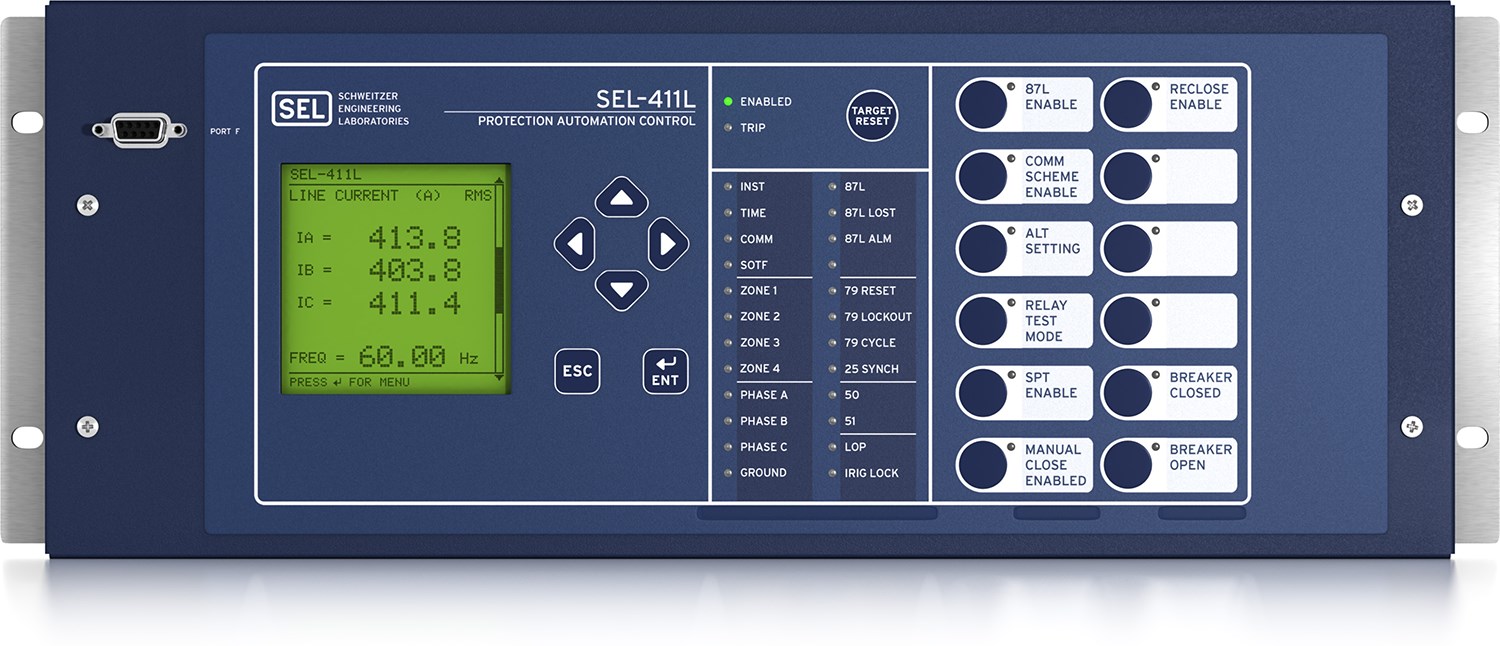
High-Speed Differential Protection
Differential elements improve system stability with subcycle operating times . Line charging current compensation provides an accurate response for long or short lines. Apply the proven Alpha Plane operating principle for reliable and secure operation. Serial or Ethernet channels can be used for differential protection.Multiterminal Protection With Fault Location
Line current differential protection provides high-speed protection for multiterminal lines, even with two breakers per terminal. Protect up to three terminals using serial communications or up to four terminals using Ethernet. In addition, the multi-ended impedance-based fault locating algorithm uses information from all terminals to accurately locate faults.Distance Protection
Complete subcycle distance and directional elements provide standalone protection or backup protection to differential schemes in the event that communications are lost. Best Choice Ground Directional Element logic optimizes directional element performance and eliminates the need for many directional settings. Apply the distance and directional elements in communications-based protection schemes like POTT, DCB, and DCUB, or for instantaneous or time-step backup protection.Complete Reclosing System With Synchronism Check and High-Speed Breaker Failure Detection for Two Breakers
Dual CT and PT input logic and settings are included for control of two circuit breakers. Settable voltage inputs provide flexible operation. Open-pole detection in less than 5/8 of a cycle allows the use of shorter breaker failure margin times. Independent current inputs provide protection for two circuit breakers.Fault Locating
Accurately pinpoint faults using the double-ended traveling-wave fault locating method. Save time and money by sending maintenance crews to the tower closest to the fault. At the same time, ensure dependability with single- and multi-ended impedance-based fault-locating methods.Broken Conductor Detection
The Broken Conductor Detection (BCD) element is designed to detect a conductor break before it converts into a shunt fault for overhead lines. The BCD element can help in mitigating possible fire or public hazard. The detection logic compares the measured current against the line charging current threshold and uses the angular difference between the phase voltage and phase current to detect the conductor break. Additionally, the BCD function includes fault locating and phase identification to assist the user in restoring service. Synchrophasor Measurements to Increase Asset Utilization
Use IEEE C37.118.1/2-2011, -2014a Standard for Synchrophasor Measurements for Power Systems with 1–60 messages per second to analyze power system events and to validate system load flow and fault models. Apply direct relay-to-relay synchrophasors for wide-area-based control without additional devices.True Digital Fault Recorder (DFR) Functionality
Use records sampled at 8 kHz in IEEE C37.111-2013 COMTRADE format to analyze power system events directly from the relay without the need for dedicated equipment.SEL TiDL-Based Solutions
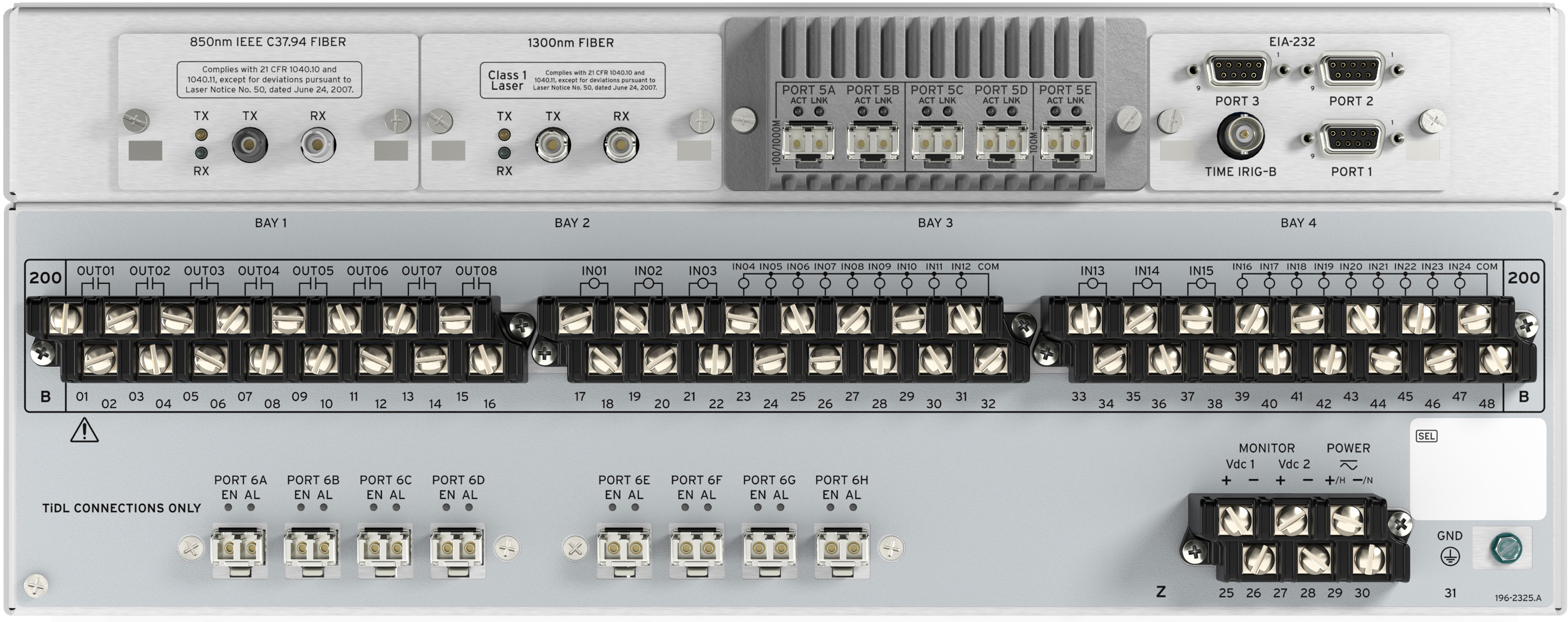
Apply a TiDL-based process bus solution, where SEL-TMU devices are placed in the yard close to the primary equipment to digitize discrete I/O signals and analog data. SEL-TMU units exchange these data with an SEL-411L-2 TiDL relay in the control house. Each SEL-TMU can share data with as many as four TiDL relays, providing protection design flexibility. TiDL combines the proven protection of the SEL-400 series relays with the purpose-built SEL-TMU, simplifying deployment, reducing training requirements, and increasing availability. TiDL technology uses point-to-point connections and a non-Ethernet protocol, providing a simple and secure solution. TiDL also provides built-in data synchronization and synchronous sampling, ensuring protection is available in the relay regardless of whether an external time signal is available.SEL SV-Based Solutions
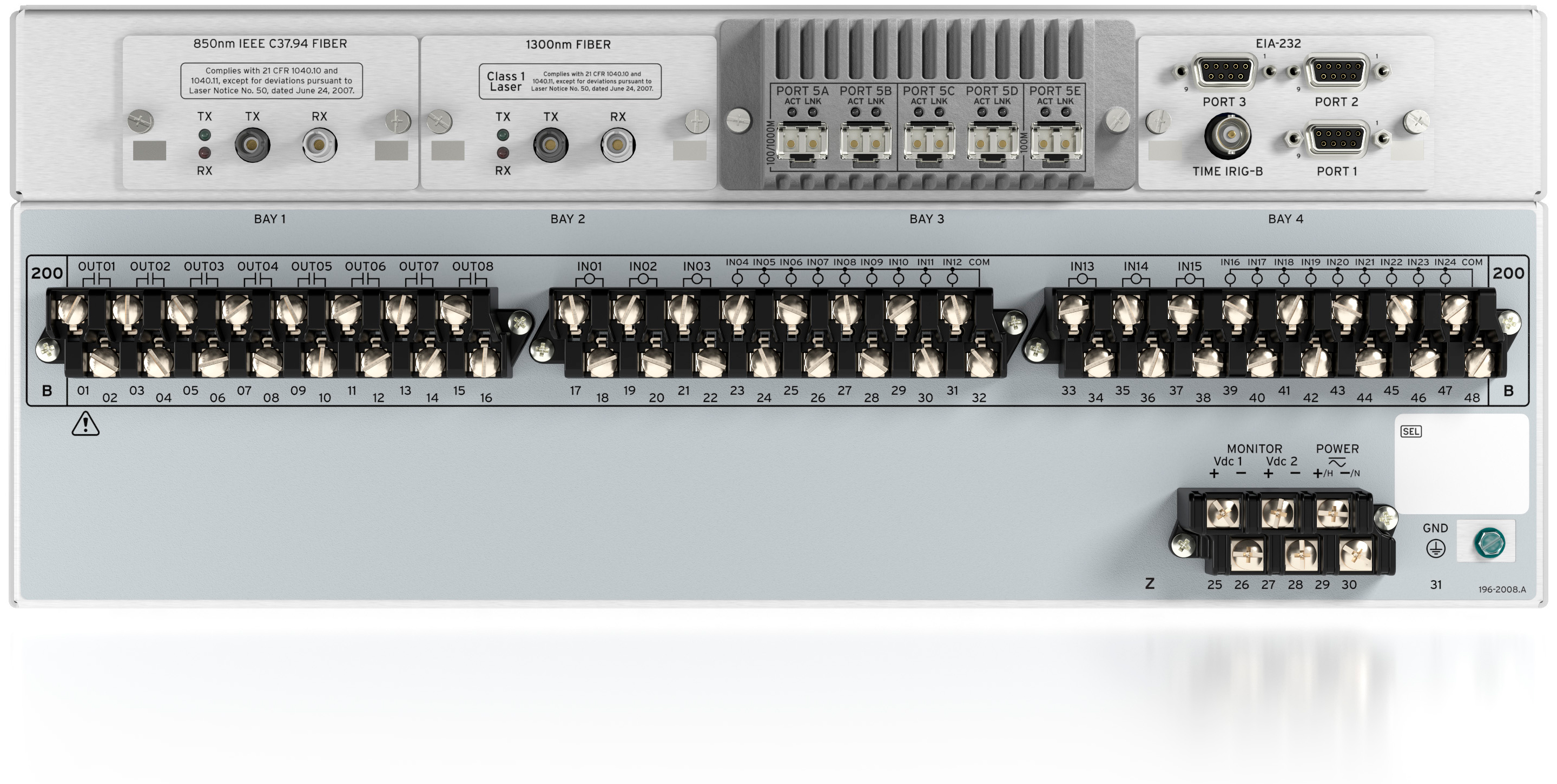
Based on IEC standards, SV-based solutions maximize flexibility and interoperability. The SEL-401 Protection, Automation, and Control Merging Unit and the SEL-421-7 Protection, Automation, and Control System Merging Unit digitize analog signals from primary equipment and send them using the Sampled Values protocol to an SEL-411L-2 SV relay in the control house. Because all SEL SV devices are compliant with IEC 61850-9-2 and the UCA 61850-9-2LE guideline as well as IEC 61869-9, the SEL-411L-2 SV relay can be used with other manufacturers compliant units. Flexible Ethernet Communications
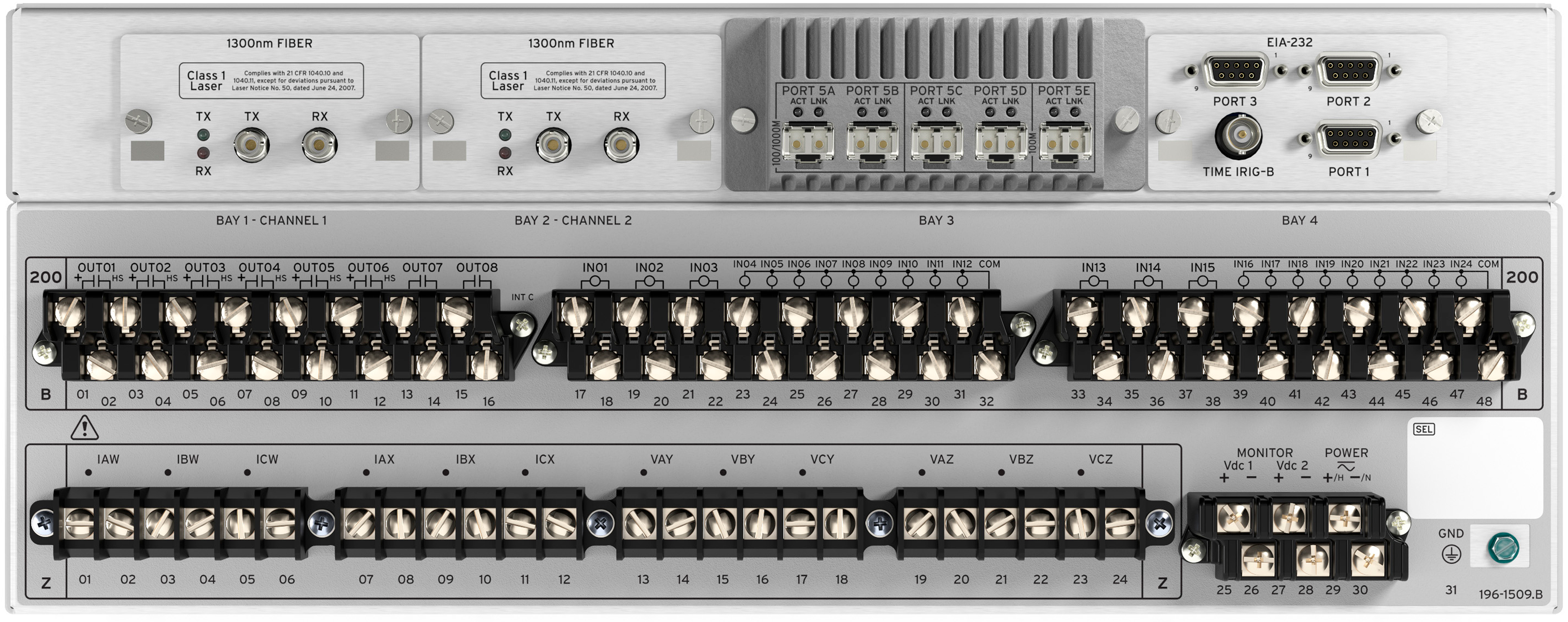
The four- and five-port Ethernet communications card options enable you to communicate using a variety of protocols, including FTP, HTTP, DNP3, PTPv2, PRP, Telnet, synchrophasors, and IEC 61850 Edition 2.1.The SEL-411L can be configured with a five-port Ethernet card supporting PRP, HSR, or failover functionality to increase system availability, as well as the Precision Time Protocol Version 2 (PTPv2) on process bus or station bus ports for time synchronization. Use network monitoring features in the relay to further improve system availability by actively monitoring each redundant path to detect communications network failures.The five-port card also features dedicated ports and IP addresses for station bus and engineering access networks to provide selective access control. All ports support small form-factor pluggable (SFP) transceivers. Single- and multimode communications options provide increased flexibility. All ports support 100 Mbps SFP transceivers, and process bus ports also support 1 Gbps SFP transceivers.Serial Communications
All four independent EIA-232 serial ports support SEL Fast Message, ASCII, Compressed ASCII, Extended Fast Meter, Fast Operate, Fast SER, SEL Mirrored Bits communications, Ymodem, and DNP3 Level 2 Outstation as well as dial-out, Virtual Terminal, and communications with SEL-2600 series RTD modules.Simplified Settings Management
Use acSELerator QuickSet SEL-5030 Software to develop relay settings offline and program SELogic control equations. Configure the TiDL and SV relays using SEL Grid Configurator software, which increases efficiency and improves settings insights. It features a spreadsheet-style editor, protection visualization, comprehensive reporting, custom filters, and multiple-device settings management.